Garage conversion value in Telford is one of the better returns available on any home improvement, largely because the shell of the room already exists. Where an extension means building new walls, foundations and a roof from scratch, a garage conversion works with structure that is already there, which is why it typically costs a fraction of an equivalent extension while adding a comparable amount of usable floor area. This looks at where that value actually comes from in the Telford market specifically, which conversion types add the most, and where a conversion can fail to pay for itself.
Why Garage Conversions Punch Above Their Cost
An extension of equivalent size to a converted single garage — roughly 15 to 18 square metres — typically costs £27,000 to £40,000 in the Telford area once foundations, a new roof and full structural work are included. The equivalent garage conversion, using walls, roof and floor slab that already exist, runs £8,000 to £20,500 depending on what the room is used for. The value added to the property is broadly comparable in both cases, which makes the garage conversion the significantly better return per pound spent.
This holds particularly well across Telford’s New Town estates, where a large proportion of the original housing was built with an integral single garage that many households genuinely do not use for parking. Converting unused storage space into a functioning room is close to the purest form of value creation available in residential building work.
Which Conversion Type Adds the Most Value
Bedroom count is the single strongest driver of a property’s valuation, more than almost any other single factor. A three-bedroom house becoming a four-bedroom house through a garage conversion typically sees a value increase that comfortably exceeds the cost of the work, and this holds particularly well in Telford, where a great deal of the original New Town housing stock was built as compact three-bedroom starter homes for young families — many of whom stayed, and now need more space than the original house type provides.
A home office conversion adds real value too, though it is harder to quantify precisely because it does not change the official bedroom count that valuers and portals use as a headline figure. Its value shows up more in desirability and time-to-sell — Telford’s direct M54 access to the M6 and its rail links to Wolverhampton and Birmingham make it a genuinely practical base for hybrid commuters, and a house that already has a proper separate office is more attractive to that buyer than one where they would need to create their own.
A double garage conversion into an annexe with its own shower and kitchenette sits in a different category again, adding value through flexibility — suitable for a dependent relative, an adult child, or as a rental unit. This applies most readily on the town’s larger later-phase executive housing and in the more affluent absorbed towns such as Shifnal, where double garages are more common in the first place.
The Energy Efficiency Angle
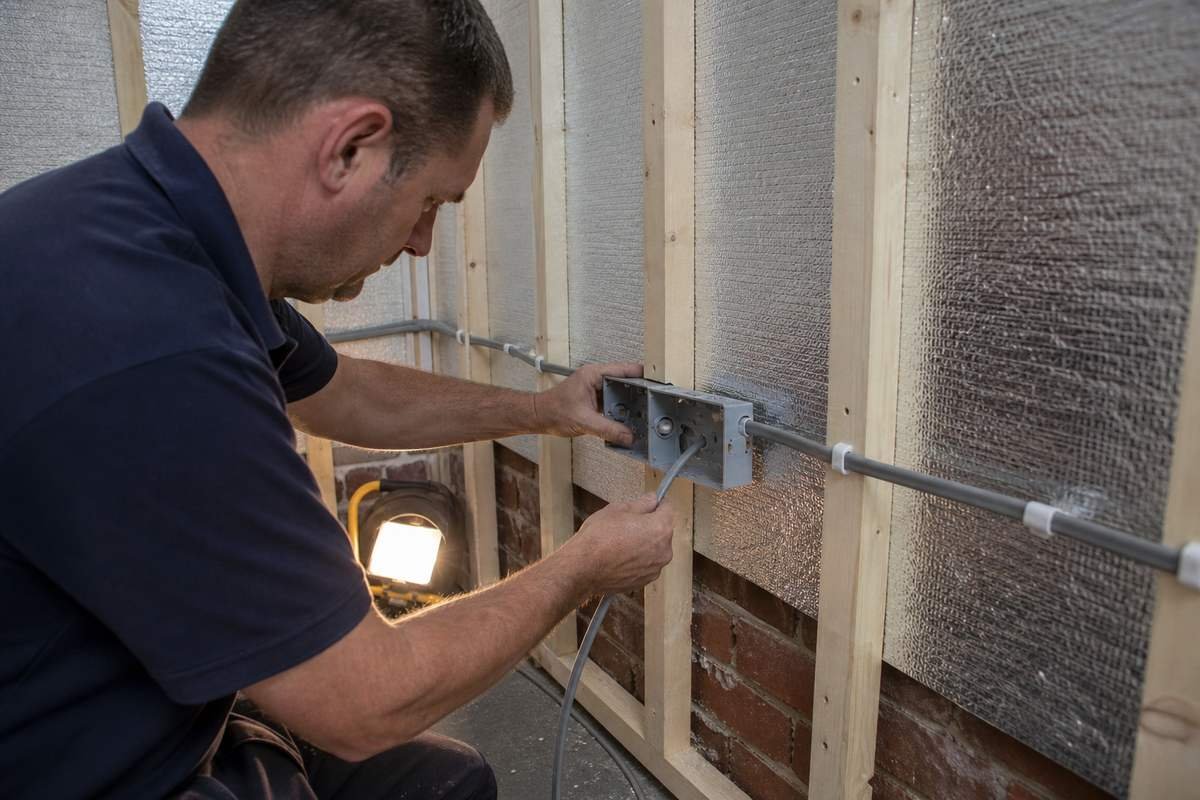
A garage conversion done properly, with insulation brought up to current Part L standards throughout the floor, walls and any relevant roof section, improves the thermal performance of that part of the building meaningfully. On a whole-house EPC assessment this can produce a genuine improvement in the property’s rating, since the space moves from an unheated, uninsulated void to a properly insulated habitable room.
Where Value Is Not Guaranteed
Over-improving for the street
A five-bedroom house on a street of predominantly three and four-bedroom homes will not command a proportional premium, because buyers largely price against the street rather than the individual property. This applies as much on Telford’s New Town estates as anywhere else, where house types were often built in large numbers to a small set of designs.
Losing genuinely used parking
Where a garage is actually used to park a car, converting it can create a genuine drawback for some buyers. This matters far less on properties with a driveway in front of the garage, which describes the large majority of Telford’s estate housing, since off-street parking remains available regardless of what happens inside the garage itself.
Poor quality conversions
A conversion done without proper damp proofing, insulation or Building Regulations sign-off can actively reduce value rather than add it, because the absence of a completion certificate becomes a negotiating point for any buyer’s solicitor and the underlying defects, usually damp reappearing within a year or two, are expensive to put right.
Comparing Garage Conversion Against Other Options
Where a property does not have a suitable garage, or the garage is genuinely needed for parking, a loft conversion is often the next best option for adding space, though it typically costs more and involves a longer, more disruptive build. Where both a garage and loft could be converted, doing the garage first is usually the more sensible order — it is cheaper, faster, and gives an early sense of how the household actually uses additional space before committing to the larger loft project.
Two Worked Comparisons
A three-bedroom New Town semi converting a single garage to a fourth bedroom, cost around £12,000. Comparable four-bedroom houses on the same estate typically command a meaningful premium over three-bedroom equivalents locally, and that gap generally exceeds the conversion cost by a healthy margin, alongside the household gaining the use of the room for however long they stay.
A larger detached house in Shifnal converting a double garage into a home office and playroom, cost around £18,000. The bedroom count does not change, so the value uplift is less directly measurable, but the property became noticeably more marketable to the specific buyer profile common in that town — a household with at least one parent commuting into Birmingham on a hybrid basis, who values a properly separated office over a nominal fifth reception room.
How Long the Value Takes to Show
Unlike some improvements that show up immediately in a valuation, a garage conversion’s value is most clearly demonstrated at the point of sale, when it can be presented as a genuine bedroom or a properly finished room with a completion certificate to back it up. In the meantime, the household gets the use of the space, which for many people is the primary reason for doing the work at all — the resale value is a welcome secondary benefit rather than the sole justification.
The Telford Market Context
Telford’s combination of relative affordability compared with much of the West Midlands, direct M54 motorway access and rail links into Birmingham means demand for family housing continues to hold up well, particularly among buyers priced out of Birmingham itself but wanting to stay within a reasonable commute. That demand is exactly what a bedroom-adding garage conversion is best positioned to satisfy, and it is one of the reasons garage conversions remain a reliably valuable home improvement across the borough.
If you are considering a conversion primarily for the value it will add rather than purely for your own use, it is worth discussing your specific street and property type at survey — the return varies enough between a New Town estate semi and a larger detached house in one of the older absorbed towns that a general figure only takes you so far.
Guidance on energy performance certificates and how insulation improvements affect a property’s rating is published by GOV.UK.
To understand what a conversion on your property would involve, read about a bedroom conversion, the type that typically adds the most measurable value, or a home office conversion if your priority is desirability rather than bedroom count.